How To Calibrate Mac Screen For Photo Editing
A colorimeter is a piece of hardware that you place on your screen; the hardware works in conjunction with some included software to calibrate your monitor's colors and brightness regardless of ambient light and other distractions. Stay Private and Protected with the Best Firefox Security Extensions The Best Video Software for Windows The 3 Free Microsoft Office Photo Editor Alternatives Get the.
Understand when your monitor needs calibration. Typically speaking, high-resolution monitors that you connect to a desktop unit (e.g., a 4K display) require some calibration before they'll display correctly the colors and items on your screen. Flip4mac download. Failing to calibrate such monitors can result in washed-out or blurry textures.
• Lower-quality monitors (e.g., 720p ones)—especially ones used for gaming or other casual activities—don't need to be calibrated, though calibration won't hurt them. • Built-in monitors such as the ones included in laptops rarely need calibration, though you're more than welcome to calibrate built-in monitors using the same process you'd follow for a separate one.
0 Comments A Guest Post by Andrew Mills from. Many of us spend a small fortune on our camera equipment trying to get the best quality we can, yet so many of us miss out on an important step that can make a huge difference to our photos. Office for mac free download. That step is to calibrate your monitor. You can view the same image on the same computer, and just swap the monitor for another and that image will look different on each monitor you try (even monitors of the same brand and model may not be exactly the same).
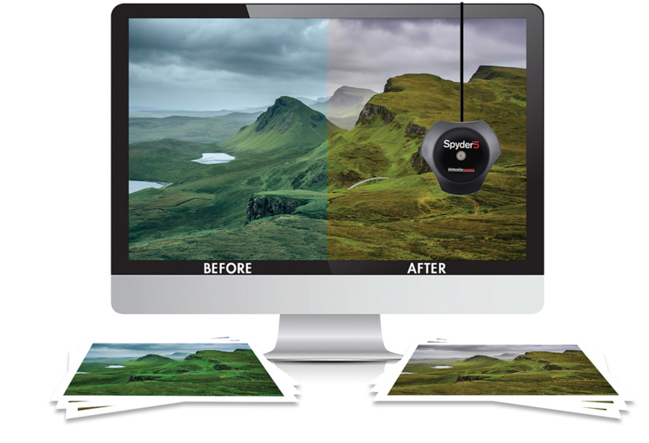
As a result, you can’t be 100% sure that your images’ colour balance, hue, contrast and brightness are set correctly. You may be lucky in that your monitor is set up fairly well by default, but this can not be expected. The image below is a photo of a section of my laptop screen (it is an actual photo, doing a screen grab won’t capture the effect the monitor has).  Actually, it’s a composite of two photos – the upper right half is with no monitor profile, the lower left half is with the profile active. As you can see, by default, my laptop screen is a tad too dark and has a horrible blue cast – this is something I had not noticed until I had calibrated it. If I edit an image, set its colour balance and brightness and contrast with the uncalibrated screen, I will be unwittingly compensating for that extra blue I see, so I will end up adding yellow, or taking blue away to make it look correct – this means that any resulting prints will have a yellow cast. You will then spend ages swearing at your printer, fiddling with its colour profiles and wasting loads of ink and paper (and money).
If you’re lucky, some labs will colour correct images for you – but don’t expect professional labs to do so as they expect you to make sure it’s correct beforehand (unless you ask – they won’t change an image in case they “mess up” and intentional effect). So, by calibrating your monitor, you are “standardising“ it – any photo you edit on your calibrated monitor should look the same on any other calibrated monitor, and should also print with little or no adjustment, and it should come back from the lab and look as you expected.
So how do I calibrate my monitor? Photoshop and Paint Shop Pro both have utilities built in where you can do a basic calibration. To be honest, in my experience they are next to useless (but possibly better than nothing). Look in your editing application’s manual to see if it has this built in, and how to use it.
The best option is to get a colorimeter – I use X-Rite’s (AKA GretagMacbeth) i1 (AKA Eye-One) display 2 (supports both PC and MAC), which looks a bit like a computer mouse. Once the software is installed, you plug the colorimeter into a USB slot, fire up the software and place the colorimeter on the screen. Step 1: You’ll be asked whether you want “Easy” or “Advanced” – most people will only need “Easy”. Step 2: You’ll be asked what sort of monitor you will be testing – you will have a choice of “LCD”, “CRT” and “Laptop”. Even though your laptop has an LCD screen, you still choose Laptop. Click the right arrow. Step 3: Place the colorimeter onto the screen as shown.